The Strength of the Curve: Why Choose HDPE Molded Bends for Your Pipeline
Title Tag Suggestion (60 characters max):
HDPE Molded Bends & Elbows | Full-Pressure Rated PE100 Fittings
Meta Description Suggestion (160 characters max):
Ensure pipeline integrity with HDPE Moldet Bends (90°, 45°, 22.5°). Fully pressure-rated, seamless, and superior to fabricated segmented elbows. Available in PE100 & PE80.
Header 1: HDPE Molded Bent . The Standard for High-Pressure Pipe Redirection
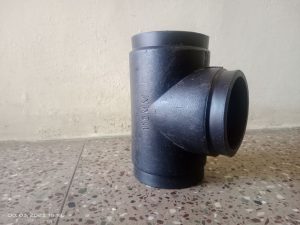
When designing modern High-Density Polyethylene (HDPE) pipeline systems, selecting the right components for directional changes is critical. While pipe flexibility is valuable, abrupt or high-stress turns demand a fitting that guarantees long-term integrity: the HDPE Molded Bend (or HDPE Molded Elbow).
Manufactured using a precise injection molding process from virgin PE100 or PE80 resin, these bends are distinctly superior to lower-cost, fabricated segmented fittings. They are designed to be fully pressure-rated, eliminating the need for deration (pressure reduction) that is often required with segmented elbows. For demanding applications in water, gas, mining, and industrial sectors, molded HDPE bends represent the pinnacle of fitting reliability.
Header 2: The Critical Advantage of Injection Molding
What makes a molded bend the preferred choice for engineers? It comes down to structural quality and consistency.
- Seamless, Homogeneous Structure: Unlike segmented bends, which are made by butt-fusing multiple pieces of pipe together, a molded HDPE bend is created as a single, uniform piece. This process ensures a consistent wall thickness and density throughout the fitting, especially in the critical curve area.
- Full Pressure Rating (No Deration): The robust design and integral reinforcement of injection-molded fittings allow them to maintain the same SDR (Standard Dimension Ratio) and PN (Nominal Pressure) rating as the pipe itself. This guarantees that the bend will not be the weak link in your high-pressure system.
- Superior Flow Characteristics: The smooth, uninterrupted internal bore of the molded bend minimizes turbulence and pressure loss, ensuring superior hydraulic efficiency and reduced operating costs over the pipeline’s lifespan.
Header 3: Types and Key Specifications
Our extensive inventory of HDPE pipe bends meets international standards and is ready for immediate butt fusion or electrofusion into your network. We stock all common angles and pressure classes:
| Bend Angle | Common Use | Connection Type | Material Grade |
| 90 Degree Molded Elbow | Sharp directional change | Butt Fusion / Electrofusion | PE100 / PE80 |
| 45 Degree Molded Bend | Gradual directional change | Butt Fusion / Electrofusion | PE100 / PE80 |
| 22.5 Degree Molded Bend | Slight offset or sweep | Butt Fusion / Electrofusion | PE100 / PE80 |
These fittings are available in all standard diameters, including larger sizes (up to 630mm OD) before transitioning to fabricated sweeps. They are ideal for high-stress applications due to their exceptional impact strength and chemical resistance.
Header 4: Applications Demand Molded Quality
In infrastructure projects where system failure is not an option, the investment in a molded HDPE bend pays off:
- Potable Water Networks: Maintaining joint integrity and purity over decades.
- Natural Gas Distribution: Providing a reliable, zero-leak solution for safety-critical connections.
- Mining & Slurry Transport: Withstanding the abrasion and high-pressure demands of solids transportation.
- Industrial Process Piping: Resisting corrosive chemicals and high operating temperatures.
By choosing HDPE Molded Bends, you are securing a long-spigot fitting that simplifies the fusion welding process and ensures the longevity and performance of your pipeline infrastructure.